
The analysis of Napoleon Bonaparte’s military strategies during the Napoleonic Wars uncovers the duality of his legacy, showcasing his unmatched brilliance on land and his consequential shortcomings at sea. Focusing on the two significant battles of Austerlitz and Trafalgar, this article examines how the former solidified Napoleon’s tactical genius while the latter illuminated his naval deficiencies. In Austerlitz, a smaller French army defeated a larger Austro-Russian coalition through strategic manipulation and decisive counterattacks, while Trafalgar revealed the limitations of his naval power, orchestrated by unexpected British tactics.
Examining these events not only highlights the contrasting outcomes of Napoleon’s engagements but also reflects the broader shifts in European power dynamics during the early 19th century. The consequences of these battles underscore how victories and defeats shaped the trajectory of nations and the ambitions of leaders, impacting the geopolitical landscape of Europe. Through detailed exploration, one gains insight into the complexities of military leadership and the multifaceted nature of warfare during this pivotal era.
The Napoleonic Wars: A Comprehensive Analysis

Background of the Napoleonic Wars
Overview of the Napoleonic Wars
The Napoleonic Wars, occurring from 1803 to 1815, marked a significant transformation in European political structures and military practices. These conflicts were fundamentally influenced by the ambitions of Napoleon Bonaparte, whose desire to expand French territory often pit him against various coalitions of European powers. Rooted in the initial conflicts of the French Revolutionary Wars, the Napoleonic Wars eventually encompassed a series of multi-national battles that reshaped the continent. Central to this period of unprecedented warfare were factors such as nationalism, the evolution of military tactics, and the quest for dominance over Europe.
Key Players and Alliances
The Napoleonic Wars saw a complex interplay of alliances and enmities among nations, notably including France, Austria, Russia, Britain, and Prussia. The primary antagonist to Napoleon’s objectives was the Third Coalition, consisting of Austria, Great Britain, Russia, and other states that sought to curtail French expansion. The shifting alliances reflected not only military strategies but also deeply rooted historical animosities, geopolitical interests, and economic considerations. As the wars progressed, the dynamics within these alliances often influenced the course and outcomes of the battles.
Strategic Importance of Austerlitz
The Battle of Austerlitz, fought on December 2, 1805, is often considered one of Napoleon’s most significant victories, earning it the epithet “Battle of the Three Emperors.” Its strategic implications were profound, as it effectively marked the culmination of the Third Coalition’s efforts to curtail Napoleon’s dominance. Winning at Austerlitz not only showcased Napoleon’s tactical genius but also solidified his reputation as a formidable military leader. This victory allowed France to command a pivotal position in Europe and opened pathways for subsequent territorial expansions that altered the continent’s geopolitical landscape.
The Context of the Battle of Austerlitz
Prelude to Austerlitz: Events Leading Up to the Battle
In the months leading to Austerlitz, tensions between France and the coalition forces escalated. France’s decisive victory at the Battle of Ulm facilitated a rapid march by Napoleon’s forces toward Vienna, severely undermining the Austrian strategy. The presence of substantial Russian reinforcements under Tsar Alexander I further complicated matters for Austria, leading to an uneasy coalition against the French. The battle preparation included intricate maneuvers and psychological tactics, hinting at the depth of Napoleon’s strategic planning.
Composition of the French and Allied Forces
The forces involved at Austerlitz were emblematic of the era’s military structure. Napoleon commanded approximately 68,000 troops of the Grande Armée, featuring a well-trained, experienced, and motivated force known for its discipline and relentless drive. In contrast, the Austro-Russian coalition numbered approximately 85,000 men, a formidable assembly of soldierly might, though often lacking cohesion and unified command. This clash of forces underscored Napoleon’s adeptness at maximizing the potential of his well-appointed army against greater numbers of opponents.
Intelligence and Reconnaissance Before the Battle
Intelligence played a critical role in the lead-up to Austerlitz. Napoleon’s mastery of reconnaissance allowed him to gauge the movements and intentions of his adversaries effectively. The fog of war, both literal and metaphorical, obscured the true capabilities of the Allied forces, offering Napoleon the strategic advantage of surprise. His ability to interpret intelligence accurately enabled him to concoct a brilliant tactical scheme, setting the stage for his eventual triumph.
Napoleon’s Tactical Innovativeness
Understanding Napoleon’s Military Philosophy
Napoleon Bonaparte’s military philosophy was characterized by speed, agility, and the decisive engagement of the enemy. He championed the concept of “masses of maneuver,” enabling concentrated firepower and rapid movement to overwhelm opponents. This approach illustrated a marked departure from earlier, less dynamic forms of warfare, laying the groundwork for modern military tactics that emphasized flexibility and strategic innovation.
Key Principles of Napoleon’s Tactics
One of the defining principles of Napoleon’s tactics was the effective combination of artillery, infantry, and cavalry. At Austerlitz, he notably employed the strategic deception of feigned weakness to exploit enemy vulnerabilities. This method allowed him to bait the Allied forces into a false sense of security before executing a rapid and overwhelming counteroffensive. Additionally, his focus on effective communication and unit cohesion played a crucial role in executing complex maneuvers on the battlefield.
Use of Terrain and Weather in Strategy
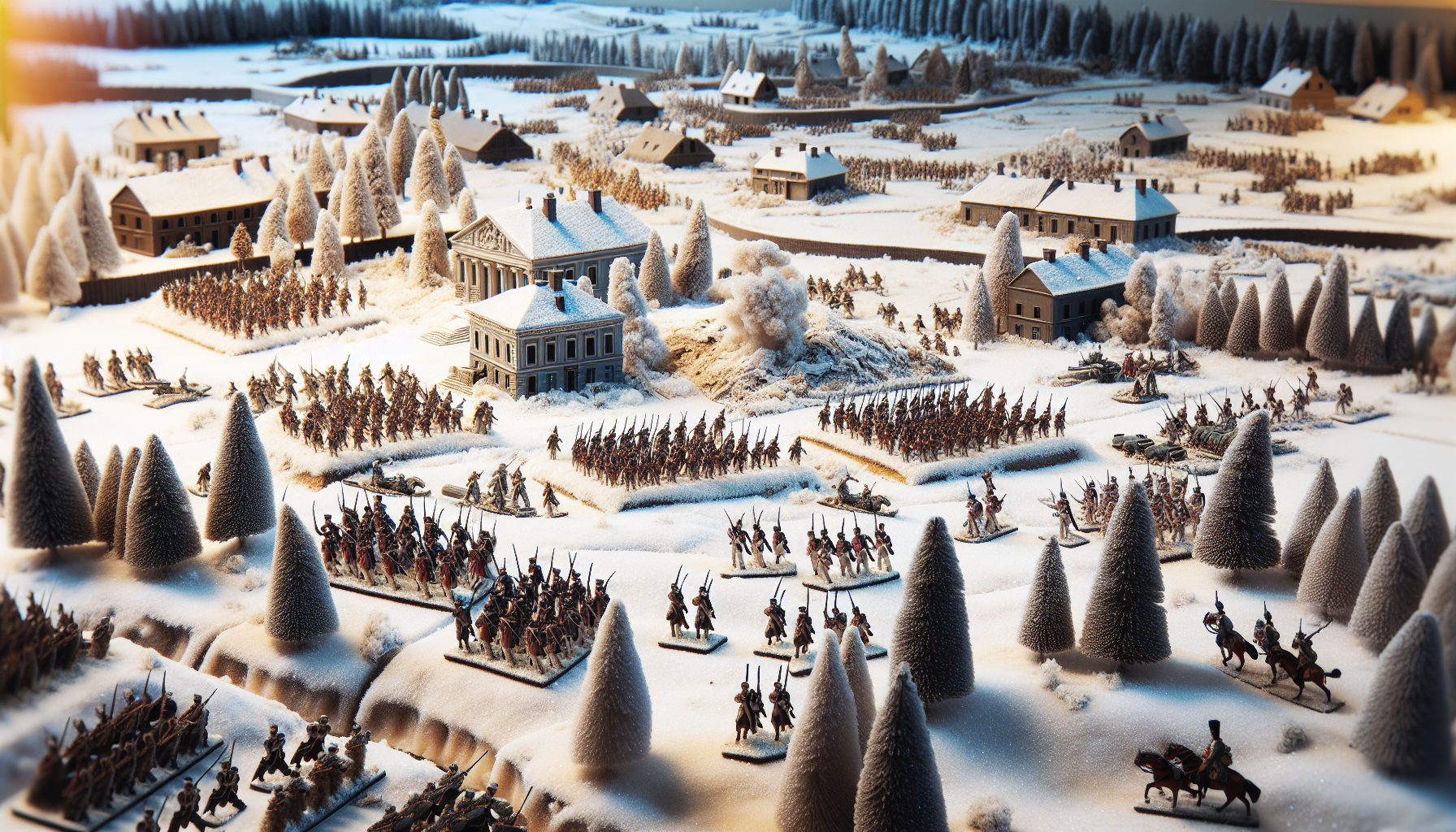
Napoleon’s innovative use of terrain and weather was integral to his battlefield success. At Austerlitz, he utilized the fog and undulating landscape to conceal troop movements and mask his true intentions. This clever manipulation of natural elements not only afforded him tactical advantages but also kept his adversaries off balance. The topographical features of the battlefield became instruments of war under his skilled command, as their strategic exploitation led to decisive moments in the battle.
The Execution of Strategy at Austerlitz
Deliberate Weakening of the Right Flank
The deliberate weakening of the right flank was a hallmark of Napoleon’s overarching strategy at Austerlitz. By intentionally retreating troops from this section, he created an illusion of vulnerability, drawing the Allied forces into a precarious position. This tactic capitalized on the foe’s ambition to exploit perceived weaknesses, which would soon be transformed into a devastating encirclement.
The Role of the Pratzen Heights
Central to the battle’s unfolding was the Pratzen Heights, a critical vantage point on the battlefield. Recognizing its strategic importance, Napoleon aimed to retake this position through a decisive counterattack. The ascent to the heights not only allowed for superior observation and artillery placement but also served as the pivot around which the larger offensive maneuvered. Successfully capturing this terrain decisively ruptured the cohesion of the opposing forces.
Timing and Coordination of Counterattacks
The timing and synchronization of Napoleon’s counterattacks were executed with remarkable precision. Once the Allied forces entered a vulnerable position, he sprang into action, directing a multi-pronged offensive aimed at enveloping the reorganizing enemy troops. The effective coordination among different branches of his military underscored the superiority of his command style and highlighted the meticulous preparation that characterized his approach to battle.
Impact of Austerlitz on the War
Casualties and Immediate Consequences
The casualties at Austerlitz were significant yet reflective of the battle’s ferocity. The Grande Armée inflicted around 16,000 casualties on the coalition forces while sustaining approximately 9,000 losses itself. The immediate consequences were staggering; the defeat shattered the momentum of the Allied coalition and prompted Austria to seek peace with France, setting the stage for a shift in European power dynamics.
Political Repercussions for Austria and Russia
In the aftermath of Austerlitz, both Austria and Russia faced severe political repercussions. The defeat weakened Austria’s position within the coalition framework, leading to the Treaty of Pressburg and substantial territorial losses. For Russia, the ramifications were equally profound, as Tsar Alexander I was compelled to reassess his strategies and alliances, contributing to the reconfiguration of power relations in Europe.
The Dissolution of the Third Coalition
The impact of Austerlitz catalyzed the disintegration of the Third Coalition. The overwhelming success of the French military exposed the vulnerabilities within the coalition’s structure and led to a re-evaluation of military strategies among European powers. This dissolution not only solidified Napoleon’s dominance over Central Europe but also instigated a ripple effect, prompting other nations to reconsider their stances and alliances in the face of French expansionism.
Comparative Analysis: Austerlitz vs. Trafalgar
The Importance of Naval Power in Napoleonic Strategy
The Battle of Austerlitz and the Battle of Trafalgar stand as two pivotal events in the Napoleonic Wars, each illustrating the complex interplay between land and naval power. While Austerlitz showcased Napoleon’s tactical brilliance in land warfare, Trafalgar revealed the paramount importance of naval supremacy in shaping European politics and military strategies. The outcomes of these battles underscored the necessity of both land and sea forces in realizing strategic objectives.
Strategic Failures at the Battle of Trafalgar
Conversely, the Battle of Trafalgar on October 21, 1805, represented a stark contrast to the triumphs at Austerlitz. Here, Admiral Horatio Nelson’s naval strategies effectively undermined Napoleon’s plans for an invasion of Britain. The British fleet’s decisive victory obliterated the capabilities of the combined Franco-Spanish fleet, leading to the loss of 22 allied ships without incurring any British casualties. This naval loss not only frustrated Napoleon’s immediate ambitions but also solidified British naval supremacy for years to come.
Lessons Learned from Austerlitz and Trafalgar
A comprehensive analysis of both battles reveals critical lessons in strategy, command, and the interplay of military forces. Austerlitz illustrates the effectiveness of tactical ingenuity in land warfare, emphasizing adaptability and psychological manipulation of the enemy. Contrastingly, Trafalgar highlights the vulnerabilities inherent in underestimating naval power and the necessity for cohesive command in maritime engagements. Together, these battles provide a nuanced understanding of military strategy, showcasing both successes and failures that shaped the course of the Napoleonic Wars.
Aftermath of the Battle of Austerlitz
Formation of the Confederation of the Rhine
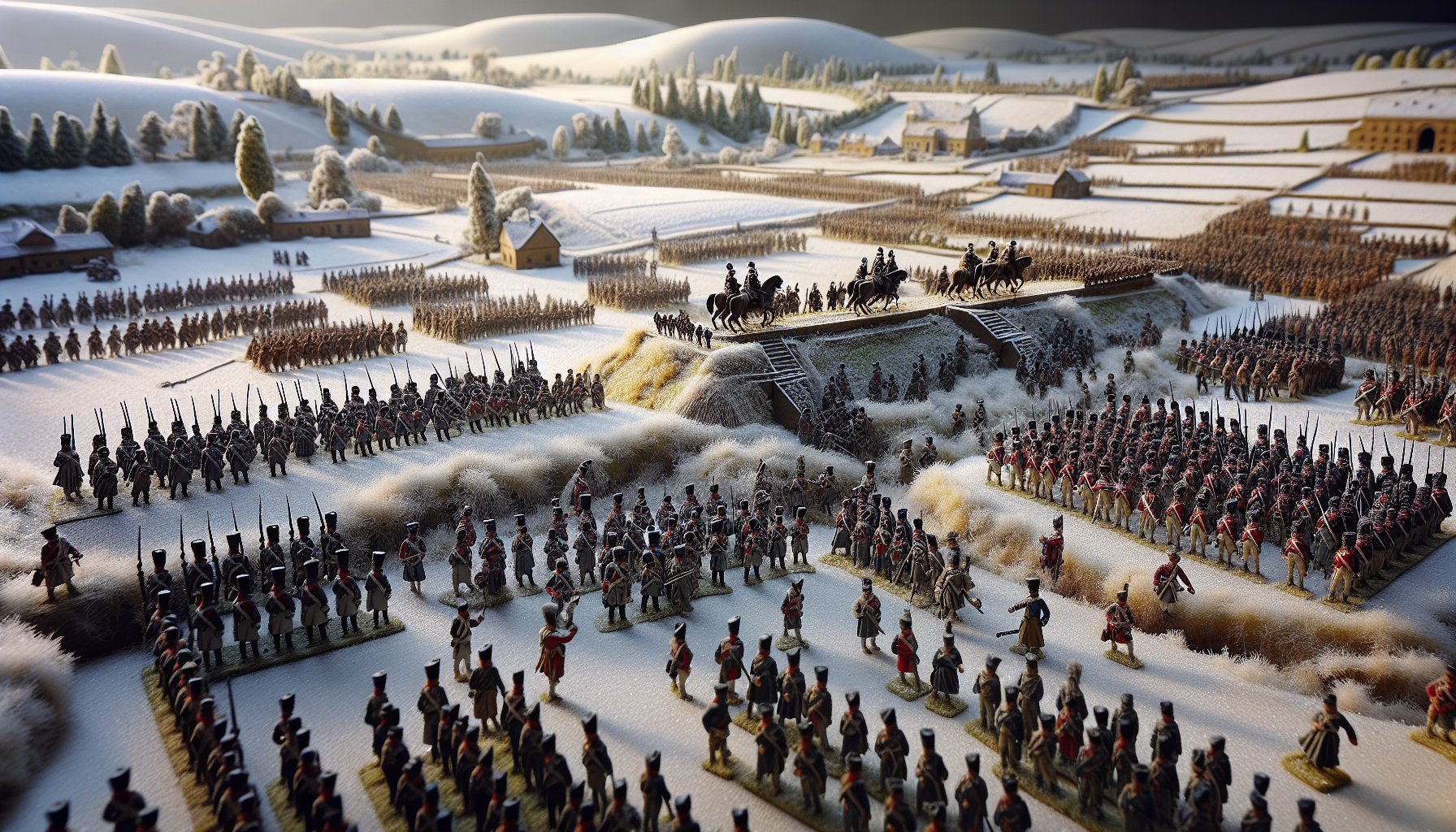
In the wake of Austerlitz, Napoleon’s influence catalyzed the formation of the Confederation of the Rhine in 1806. This assembly of German states under French protection not only extended his reach but also replaced traditional aristocratic governance with a system aligned with the French model. The Confederation served to solidify French interests within Central Europe and reinforced Napoleon’s ambition to reshape the continent.
Napoleon’s Rise to Power Post-Austerlitz
Following Austerlitz, Napoleon’s power surged to unprecedented heights. The battle further entrenched his leadership and enhanced his charisma, allowing him to propagate the ideals of the Revolution while annexing territories across Europe. This newfound authority enabled him to consolidate power, presenting himself as the savior of revolutionary principles, while also establishing a vast empire.
Long-term Effects on European Politics
The broader implications of Austerlitz resonated throughout European politics for years to come. The defeat of the coalition forces forced nations to grapple with their military strategies and alliances. Austerlitz was not merely a battle; it marked a critical juncture that heralded a new phase in international relations, characterized by shifting alliances and a recalibrated balance of power that persisted long after Napoleon’s fall.
Legacy of Napoleon’s Tactics
Influence on Military Strategy in History
The legacy of Napoleon’s tactics extends beyond the Napoleonic Wars, influencing military strategy across centuries. His innovative approaches to combined arms, mobility, and strategic deception have become foundational principles studied in military academies worldwide. The reverberations of his tactics can be observed in various conflicts, illuminating the evolution of warfare in modern contexts.
References in Modern Warfare
Napoleon’s legacy is particularly evident in the analysis of modern military operations. The principles he employed resonate in contemporary military doctrines, where adaptability, intelligence, and surprise play crucial roles. His innovative use of rapid force projection and decisive engagement continues to inform military strategies even in contemporary conflicts, highlighting their enduring relevance.
Educational Value of Austerlitz in Military Academies
The Battle of Austerlitz serves as an essential case study in military academies, illustrating successful tactical execution and strategic planning. Scholars and military leaders analyze its components to glean insights applicable to modern conflicts. Austerlitz encapsulates the quintessence of military leadership and decision-making under pressure, contributing to the education of future generations.
Cinematographic Representations of Austerlitz
Historical Films and Dramatizations
The Battle of Austerlitz has been represented in various historical films and dramatizations that seek to capture the essence of this pivotal conflict. These cinematic portrayals contribute to public interest in Napoleonic history and artistry, even as they strive to balance dramatic narrative with factual accuracy. These representations allow audiences to engage with the history of Austerlitz through a visual and emotional lens.
Documentaries and Educational Videos
In addition to dramatizations, numerous documentaries dissect the intricacies of the Battle of Austerlitz and its broader implications within the Napoleonic Wars. Educational videos delve into various aspects, such as military strategy, leadership decisions, and the socio-political contexts surrounding the battle. These resources serve to enrich understanding and appreciation of historical events among diverse audiences.
Impact of Visual Storytelling on Public Perception
The impact of visual storytelling on public perception cannot be underestimated. Dramatizations and documentaries contribute to shaping the common narrative surrounding Austerlitz, influencing how societies interpret its significance and legacy. The emotional resonance of film and media can evoke interest in historical events, prompting discussions and further study of complex military histories.
Conclusion
Summation of Napoleon’s Tactical Brilliance
In summation, Napoleon’s tactical brilliance at the Battle of Austerlitz stands as testament to his astute understanding of warfare. His methodologies not only led to a resounding victory but also showcased the potential of strategic innovation and psychological warfare. The battle reflects the complexity of military engagements in the Napoleonic era and highlights the significance of leadership and foresight in determining outcomes.
Reflections on the Balance of Military Power
The Battle of Austerlitz, alongside its contemporaneous challenges, forces a reflection on the balance of military power during the Napoleonic Wars. It exemplifies how engaging in collective military efforts can lead to temporary victories or defeats, exposing vulnerabilities that can subsequently be exploited. The strategic equilibrium of power dynamics remains a relevant discussion within the study of global military histories.
Enduring Fascination with the Battle of Austerlitz
The enduring fascination with Austerlitz reveals a broader cultural interest in military history and leadership. Its legacy has permeated various facets of society, inspiring literature, art, and educational discourse. As a hallmark of both tactical innovation and profound consequences, the battle encapsulates the multifaceted nature of warfare, solidifying its place in the annals of history as a defining moment in the Napoleonic Wars.